
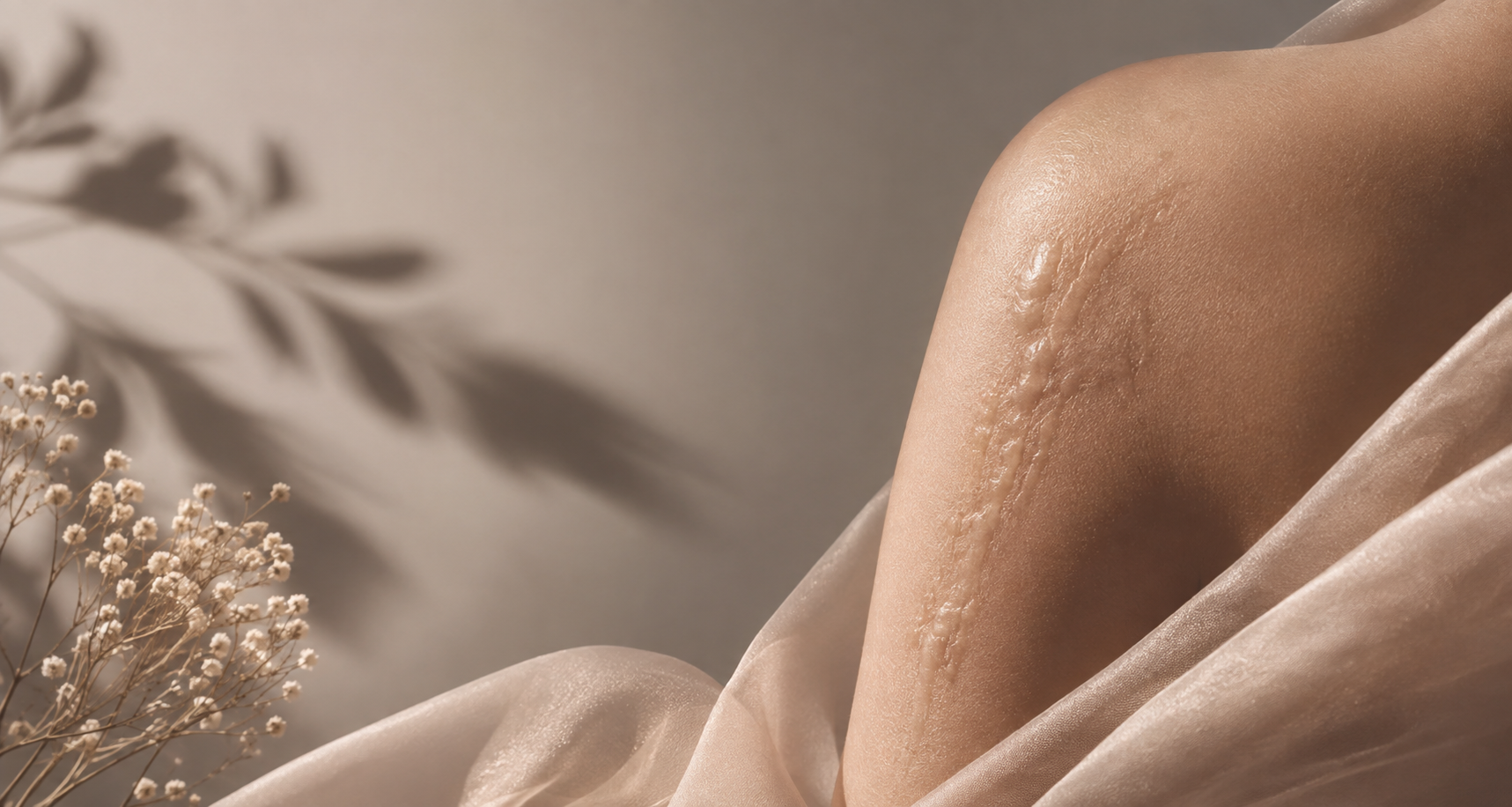
Inkless Scar Revision (ISR)
How Inkless Scar Revision Works
Controlled Stimulation
Fine needles create controlled micro-injury within the selected scar area, encouraging the skin’s natural healing and remodeling response.
Collagen Remodeling
The controlled healing response may support collagen remodeling and gradual improvement in the appearance and texture of selected scars.
Gradual Healing
The skin continues to change throughout the healing process. A treated area may temporarily look darker, redder, pinker, or more noticeable before it settles—particularly in skin that is prone to post-inflammatory hyperpigmentation.
Healing takes time, and the appearance immediately after treatment is not an indication of the final result.
What is Inkless Scar Revision (ISR)
(ISR) is a paramedical skin treatment that uses a rotary tattoo or microneedling device with fine needles to infuse nutrient-rich, medical-grade serums into scar tissue or stretch marks without depositing color or ink. It stimulates your body's natural collagen and elastin production to flatten, soften, and blend textured or indented scars.


Inkless Revision vs. Camouflage Tattooing
Inkless Scar Revision
Focuses on skin texture and the appearance of selected scars through controlled stimulation and the skin's natural healing and remodeling response. No pigment or ink is deposited.
Scar Camouflage Tattooing
Uses carefully selected skin-toned pigments to help camouflage discoloration and create a more uniform appearance.
Depending on the scar and the client's goals, these approaches may be considered separately or as part of a broader treatment plan.
Images are for educational illustration only. Individual healing responses vary.
Benefits & Considerations
Suitable for a Wide Range of Skin Tones
Suitable for a wide range of skin tones when the client and scar are appropriate candidates. Individual pigment response, healing history, and risk of post-inflammatory hyperpigmentation are considered during consultation.
No Pigment
Inkless Scar Revision does not deposit color or pigment into the skin, so there is no color matching involved.
Focuses on Skin Appearance
The treatment is designed to address the appearance and texture of selected scars rather than simply masking discoloration.
Results Vary
Every scar and every person responds differently. The number of sessions varies. Each scar responds differently, and additional treatment is performed only after adequate healing and reassessment.
Treatment is generally considered for mature, fully healed scars rather than fresh wounds.
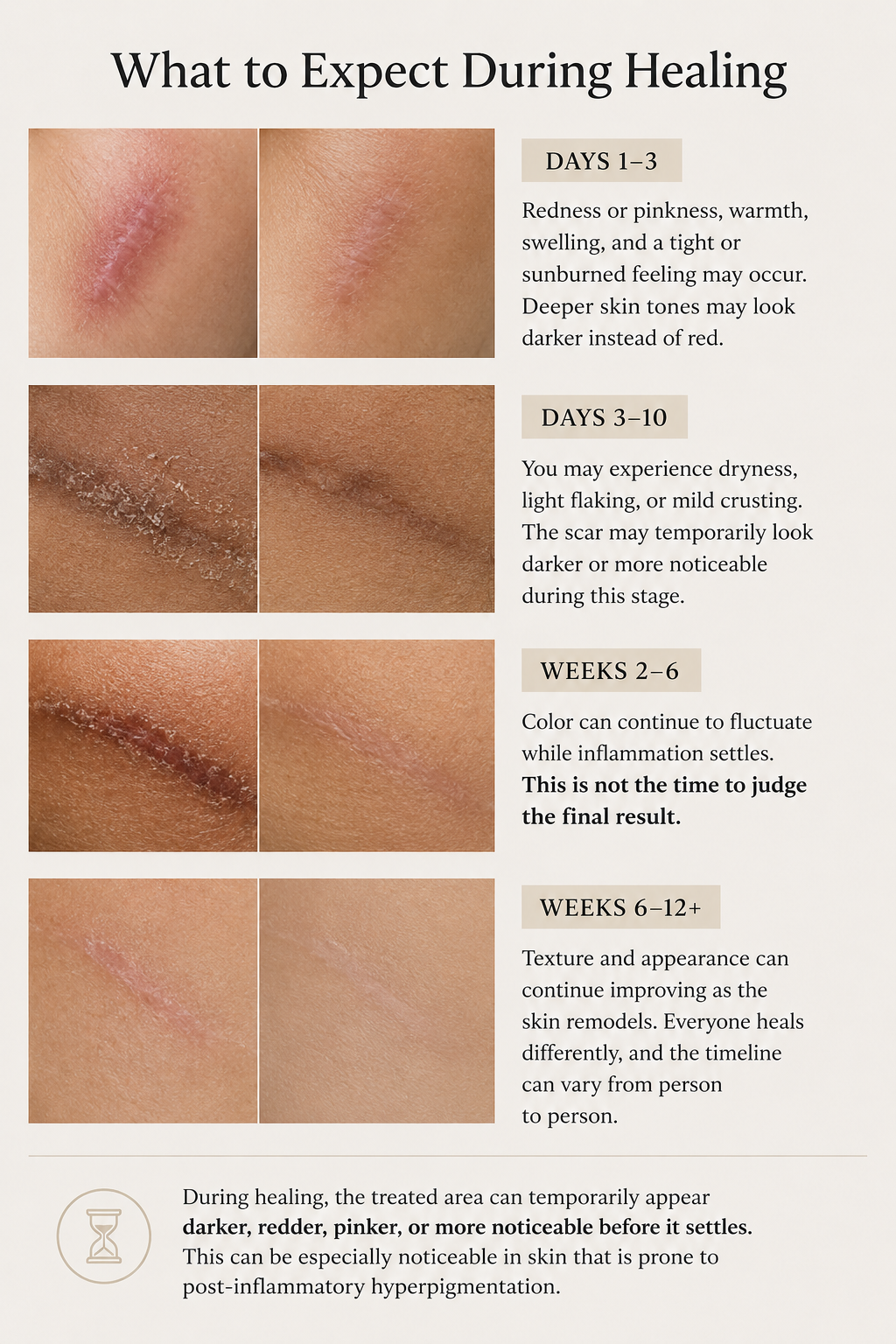
What to Expect During Healing
Days 1–3
Redness or pinkness, warmth, swelling, and a tight or sunburned feeling may occur. Deeper skin tones may look darker instead of red.
Days 3–10
You may experience dryness, light flaking, or mild crusting. The scar may temporarily look darker or more noticeable during this stage.
Weeks 2–6
Color can continue to fluctuate while inflammation settles. This is not the time to judge the final result.
Weeks 6–12+
Texture and appearance can continue improving as the skin remodels. Everyone heals differently, and the timeline can vary from person to person.
During healing, the treated area can temporarily appear darker, redder, pinker, or more noticeable before it settles. This can be especially noticeable in skin that is prone to post-inflammatory hyperpigmentation.
Patch Testing
For selected clients, two small areas may be treated first. The skin is then allowed approximately six weeks to heal so I can evaluate the individual healing and pigment response before proceeding with a larger treatment area.
Patch testing may help provide additional information about how your individual skin responds before treating a larger area.
WHY DOES MY SCAR LOOK DARKER?
During healing, a treated scar may temporarily appear darker, redder, pinker, or more noticeable. Inflammation can temporarily affect skin color, and some skin tones are more prone to post-inflammatory hyperpigmentation.
This does not automatically mean something has gone wrong.
Healing is monitored over time, and results should be evaluated after the skin has had adequate time to settle.
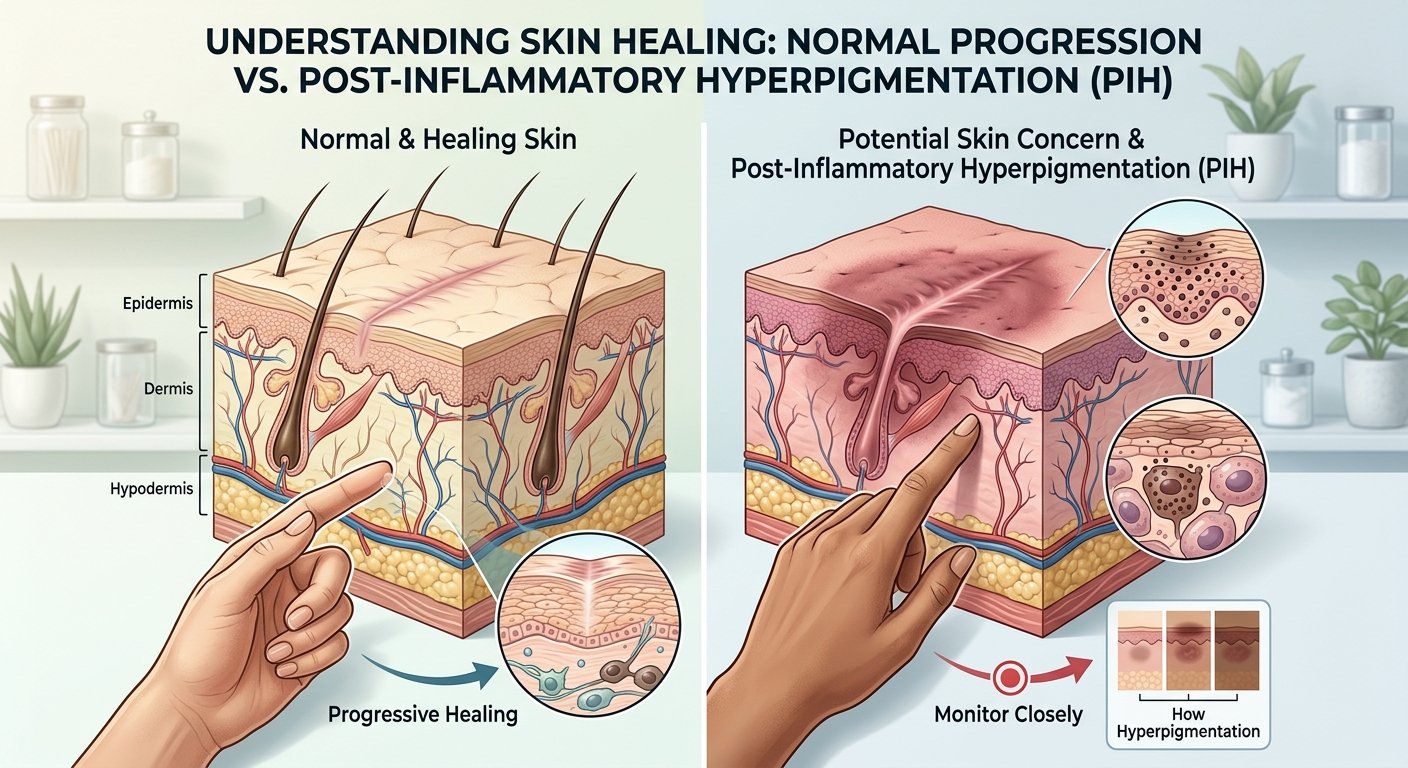
Healing Takes Time
It is important to remember that your skin does not show its final response immediately after treatment.
Color changes, redness, inflammation, dryness, and temporary darkening can all occur during the healing process. The skin continues to remodel for weeks after treatment, which is why adequate healing time and reassessment are important before deciding whether additional treatment is appropriate.
Images are for educational illustration only. Individual healing responses vary.
Is Inkless Scar Revision Right for You?
Every scar is different. Your scar's age, type, texture, location, healing history, skin tone, and previous treatments can all affect whether Inkless Scar Revision is appropriate.
During your complimentary consultation, we can discuss your specific scar, your concerns, your treatment history, and what may realistically be possible for your skin.